
Home Maintenance Tasks That Become More Difficult With Age
Published: October 7, 2026
By: Dave Robertson, Broker/Team Leader, LIFE Real Estate Group
Reading Time: 4 min read
Key Takeaway
Aging in place doesn’t mean maintaining your home entirely on your own.
The right combination of family help and professional services can allow many older homeowners to remain safely and comfortably at home for years.
The important thing is to plan for that support—and recognize when the demands of the property may eventually outweigh the benefits of remaining there.
For many older homeowners, remaining in the family home is an important goal—and in many cases, it is entirely realistic.
But successful aging in place involves more than being able to safely move around inside the house. There is another practical consideration:
Who is going to take care of the property?
A home requires year-round attention. Tasks that once seemed routine can gradually become more physically demanding, risky or difficult to manage.
That doesn’t necessarily mean it’s time to move. It means home maintenance should be part of your future housing plan.
Snow and Ice Removal
Ottawa winters can make snow removal one of the most demanding parts of homeownership.
Shovelling heavy snow requires strength and endurance, while icy driveways, steps and walkways increase the risk of falls.
If remaining at home is the goal, families should consider who will eventually handle snow clearing and whether professional service should become part of the household budget.
Lawn and Exterior Maintenance
Mowing, raking, gardening, trimming hedges and moving outdoor furniture can become increasingly demanding.
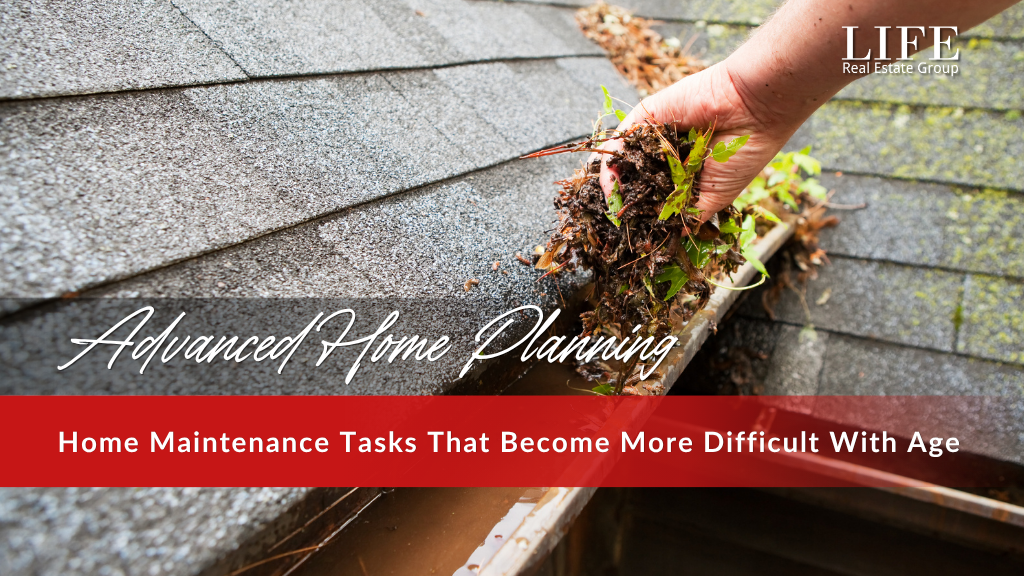
Other exterior jobs can carry even greater risks. Cleaning gutters, climbing ladders, trimming high branches or completing roof repairs may be tasks a homeowner has safely performed for decades—but eventually they may be better left to someone else.
Part of successful aging in place is recognizing that being capable of doing something doesn’t always mean you should continue doing it yourself.
Cleaning and Seasonal Maintenance
Inside the home, vacuuming stairs, washing floors, cleaning bathrooms and moving furniture all require strength, flexibility and balance.
Then there are the dozens of smaller seasonal responsibilities: changing furnace filters, checking smoke and carbon-monoxide detectors, preparing outdoor faucets for winter, cleaning dryer vents and keeping up with minor repairs.
No individual task may seem significant. Often, it is the accumulation of responsibilities that becomes difficult.
Repairs and Managing Contractors
Homeownership also means dealing with the unexpected.
Furnaces fail. Plumbing leaks. Roofs and windows eventually need replacement.
Even homeowners who don’t perform repairs themselves still need to find contractors, obtain estimates, schedule work and make decisions.
Unfortunately, older homeowners can also be targets for dishonest contractors or high-pressure sales tactics.
Families can make this easier by developing a list of trusted service providers and deciding who can assist the homeowner when larger repairs are required.
When Maintenance Starts Falling to the Family
Sometimes an older homeowner appears to be managing independently because family members have quietly taken over much of the work.
One person cuts the grass. Someone else handles the snow. Another arranges repairs or comes over whenever something breaks.
There is nothing wrong with family helping family.
But it is worth asking whether that arrangement is sustainable.
What happens if the family member providing most of the help moves away, becomes unavailable or has increasing responsibilities of their own?
Recognizing how much support the home already requires can help families plan more realistically.
Aging in Place Doesn’t Mean Doing Everything Yourself
Independence doesn’t have to mean maintaining the entire property alone.
Snow removal, lawn care, housekeeping, handyman services and help from family can allow many homeowners to remain comfortably in their homes much longer.
The important question is whether that support is available, affordable and sustainable.
Families should also consider the cost. As homeowners stop doing maintenance themselves, services that once cost only time begin appearing in the household budget.
That doesn’t necessarily make moving less expensive. But those expenses should be considered when comparing the true cost of remaining at home with other housing options.
Make Maintenance Part of Your Advanced Home Plan
Take an honest look at what your home requires and ask:
- Which tasks can I comfortably continue doing?
- Which should I stop doing for safety reasons?
- What could I hire someone else to handle?
- How much help am I already receiving from family?
- What would professional maintenance cost each year?
- At what point would maintaining this home no longer make sense for me?
You may decide that with some additional support, your current home can continue working extremely well for many years.
And that’s an important part of Advanced Home Planning: understanding what it will take to make the housing choice you prefer sustainable.
Planning for the Home You Want
LIFE Real Estate Group’s Advanced Home Planning process helps older homeowners and their families consider future housing needs before decisions become urgent.
That includes looking realistically at the current home, the support required to maintain it and the alternatives available if circumstances change.
The goal isn’t to decide today whether you’ll move. It’s to make sure your home continues to support the life you want to live.
Want to create an Advanced Home Plan? Let’s start the conversation.
About The Author

Related Posts

Why Every Family Needs a Plan for the Family Home
Why Every Family Needs a Plan for the Family Home Published: October…
